
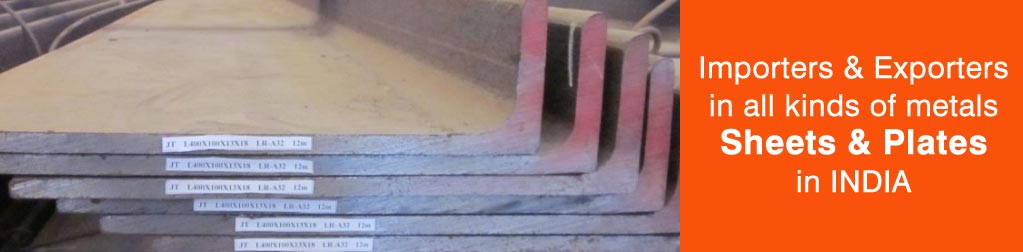
Angle Steel for Ship Building: Purchasing Specification
| Requirement | What to specify |
|---|---|
| Grade and society | State the steel grade (for example A, B, D, E, AH32, DH32, EH32, FH32 or AH36) and the classification society that will certify it. |
| Size | Plate thickness × width × length, or section size (for example a bulb flat, flat bar or angle designation), in mm; number of pieces or total weight. |
| Condition | Supply condition as required (as rolled, controlled rolled, TMCP or normalised) and Z-quality (Z15, Z25 or Z35) if through-thickness properties are needed. |
| Surface | Blast cleaning to Sa 2.5 and shop primer of 15–35 µm, if required, as the plate page lists. |
| Marking | Manufacturer, heat and batch number, grade, size and the classification society stamp. |
| Documents | Mill test certificate and society certificate, with impact test results where the grade requires them. |
Specifications
| Model | Size | Section area | Weight | ||||||
| A | B | t1 | t2 | r1 | r2 | A | M | ||
| mm | Cm2 | Kg/m | |||||||
| 200×90 | L200×90×8×14 | 200 | 90 | 8 | 14 | 14 | 7 | 27.80 | 21.8 |
| L200×90×9×14 | 9 | 29.66 | 23.3 | ||||||
| L200×90×10×14 | 10 | 31.52 | 24.7 | ||||||
| 250×90 | L250×90×9×14 | 250 | 90 | 9 | 14 | 17 | 8.5 | 34.31 | 26.9 |
| L250×90×9×15 | 9 | 15 | 35.12 | 27.6 | |||||
| L250×90×10×15 | 10 | 15 | 37.47 | 29.4 | |||||
| L250×90×11×16 | 11 | 16 | 40.61 | 31.9 | |||||
| L250×90×12×16 | 12 | 16 | 42.95 | 33.7 | |||||
| 300×90 | L300×90×10×16 | 300 | 90 | 10 | 16 | 19 | 9.5 | 43.38 | 34.1 |
| L300×90×11×16 | 11 | 46.22 | 36.3 | ||||||
| L300×90×12×17 | 12 | 17 | 49.84 | 39.1 | |||||
| L300×90×13×17 | 13 | 52.67 | 41.3 | ||||||
| 350×100 | L350×100×11×17 | 350 | 100 | 11 | 17 | 22 | 11 | 54.41 | 42.7 |
| L350×100×12×17 | 12 | 57.74 | 45.3 | ||||||
| 400×100 | L400×100×11.5×16 | 400 | 100 | 11.5 | 16 | 24 | 12 | 61.09 | 47.9 |
| L400×100×12×18 | 12 | 18 | 64.7 | 50.8 | |||||
| L400×100×13×18 | 13 | 68.59 | 53.8 | ||||||
| 450×125 | L450×125×11.5×18 | 450 | 125 | 11.5 | 18 | 24 | 12 | 73.11 | 57.4 |
Reading the table: These are unequal-leg angles with different leg thicknesses: L200 × 90 × 8 × 14 means legs of 200 and 90 mm, with thicknesses t1 of 8 mm and t2 of 14 mm. Section area is in cm², weight in kg/m, and r1 and r2 are radii in mm.
Tolerance
| Item | Tolerance | ||
| JIS G3192 | |||
| Side Length (A or B) |
A\B<50 | ±1.5 | |
| 50≤A\B<100 | ±2.0 | ||
| 100≤A\B<200 | ±3.0 | ||
| 200≤A\B | ±4.0 | ||
| Thickness (t,t1,t2) |
A<130 | t<6.3 | ±0.6 |
| 6.3≤t<10 | ±0.7 | ||
| 10≤t<16 | ±0.8 | ||
| 16≤t | ±1.0 | ||
| A≥130 | t<6.3 | ±0.7 | |
| 6.3≤t<10 | ±0.8 | ||
| 10≤t<16 | ±1.0 | ||
| 16≤t<25 | ±1.2 | ||
| 25≤t<40 | ±1.5 | ||
Reading the tolerances: The “<” and “≤” signs are partly missing in the original (“A\B50” stands for A or B less than 50 mm). Side length tolerances are ±1.5 mm below 50 mm, ±2.0 mm from 50 to under 100 mm, ±3.0 mm from 100 to under 200 mm and ±4.0 mm from 200 mm. Thickness tolerances run from ±0.6 mm up to ±1.5 mm depending on the leg size and thickness.
How the Four Ship Building Pages Differ
The four pages cover steel for ship building and oil platforms: classified plate in one page and three rolled section types, bulb flats, flat bars and angles, in the others. The plate page lists the grades by classification society; the section pages give size, weight and tolerance tables.
| Page | What it covers | Product form |
|---|---|---|
| PLATE | Plate sizes, standards and the classification society grade table | Plate, 3–180 mm thick |
| FLAT BULB | Bulb-flat size table with area, weight and allowable deviation | Section, 80 × 5 up to 430 × 20 |
| FLAT BAR | Flat-bar size table with area, weight and allowable deviation | Section, 8 × 100 up to 30 × 450 |
| ANGLE (this page) | Angle size table with section area and weight, and JIS G3192 tolerances | Section, L200 × 90 and larger |
State the grade, classification society and size on your enquiry; section sizes are listed as designations on the pages.
Related plates in this range
Applications for Angle Steel for Ship Building
Typical uses include ship hulls and decks, oil platforms, and ship stiffeners and framing such as bulb flats, flat bars and angles. Tell us the load, temperature and service conditions so the right grade and thickness can be quoted.
Cutting, Fabrication and Welding
Champak Industries describes full and part plate/profile supply and a plasma-cutting service. Send drawings, quantities, tolerances and edge preparation for your parts. Shipbuilding plate and sections can be cut to size and shape to your drawings through our plasma-cutting and cutting services. Send the grade, society, size and quantity. Weld with consumables and a procedure approved by the classification society.
Testing, Inspection Documents and Traceability
| Requirement | What to identify in the order |
|---|---|
| Classification certificate | Society (ABS, BV, DNV, GL, KR, LR, NK or RINA, as the plate page lists) and certificate type |
| Mill test certificate | EN 10204 3.1 showing grade, heat number, chemistry and mechanical properties |
| Impact test | Charpy temperature and energy for the grade (A, B, D, E and the AH, DH, EH and FH grades) |
| Z-quality | Z15, Z25 or Z35 through-thickness test, if required |
| Traceability | Heat number and plate number marked on the material |
See the company’s Quality Policy for its published policy.
Source Angle Steel for Ship Building from Champak Industries
Champak Industries’ company profile records its establishment in Mumbai in 1978 and its stockist, import and export activities. Angle Steel for Ship Building can be requested together with other plates in the Ship Building Plates Lloyds A range.
What Determines the Quotation?
Grade and brand, thickness, plate size, quantity, cutting, testing and packing all affect the quotation. Say whether pricing is needed per kilogram, per plate or per finished piece.
Packing, Dispatch and Export Requirements
Give the delivery address, required date and unloading constraints. For export orders, include the destination port, delivery terms and document list.
Angle Steel for Ship Building: Frequently Asked Questions
01What is Angle Steel for Ship Building?
Angle steel for ship building is listed in sizes from L200 × 90 × 8 × 14 up to L450 × 125 × 11.5 × 18, with section area, weight per metre and tolerances to JIS G3192.
02Which sizes does the page list?
Angles from L200 × 90 × 8 × 14 up to L450 × 125 × 11.5 × 18, in groups such as 200 × 90, 250 × 90, 300 × 90, 350 × 100, 400 × 100 and 450 × 125.
03What does the specification table give?
The model and size, leg lengths A and B, thicknesses t1 and t2, radii r1 and r2, section area (cm²) and weight (kg/m).
04Which tolerances does the page list?
Tolerances to JIS G3192 for side length (±1.5 to ±4.0 mm by size) and thickness (±0.6 to ±1.5 mm by size and thickness).
05Can Angle steel be welded?
Yes; shipbuilding steels are made for welded construction. Use consumables and a procedure approved by the classification society, and follow the mill’s preheat advice for the grade and thickness.
06Which certificate should I request?
A mill test certificate (EN 10204 3.1) plus the classification society certificate, showing the grade, heat number, chemistry and mechanical properties and any impact test results.
07Can another grade replace Angle steel?
Shipbuilding grades are approved by classification societies; substitutions need the society’s agreement, so confirm any change with your surveyor or the society.
08Can Angle steel be cut to size?
Yes. Champak Industries lists a plasma-cutting service; send drawings, quantities and tolerances with your enquiry.
09Which sizes are available?
Availability depends on the grade, society and size; send the size you need and it will be confirmed at quotation.
10How do I get a price and delivery date?
Send the grade and society, size, quantity, destination and required date through the enquiry form below, by WhatsApp or by phone.