
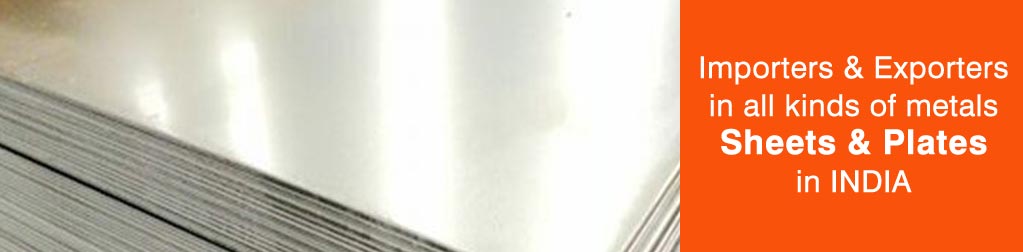
Champak Industries stockiest, supplier, importer, and exporters of Alloy 330 Plates or nickel alloy plate in thicknesses from 3/16" (4.8mm) through 1" (25.4mm) for applications in the chemical and petrochemical, Thermal also in the power generation industry. Alloy 330 (UNS N08330) is comparable to and competes directly with Rolled alloy 330.
Alloy 330 Plates: Purchasing Specification
| Requirement | What to specify |
|---|---|
| Grade and form | Alloy 330 / UNS N08330 plate. |
| Product standard | ASTM B536; state the required edition. Include ASME or AMS requirements where the purchase specification requires them. |
| Published thicknesses | 3/16" to 1" (4.8mm to 25.4mm); individual sizes are listed below. |
| Dimensions and condition | Width × length; required annealed condition, surface finish, thickness tolerance and flatness. |
| Processing | Full plate, cut piece or profile requirement; drawing, quantity and edge allowance. |
| Documents and inspection | Material certificate type, heat traceability, additional tests and inspection arrangements. |
Available thicknesses for Alloy 330 plates
| 3/16" | 1/4" | 3/8" | 1/2" | 5/8" | 3/4" | 1" |
|---|---|---|---|---|---|---|
| 4.8mm | 6.3mm | 9.5mm | 12.7mm | 15.9mm | 19mm | 25.4mm |
Dimensions, Condition and Tolerances
Specify thickness × width × length and the number of plates or pieces. For profiles, provide a dimensioned drawing with units, revision and finished-part tolerances. State whether dimensions describe the finished component or a blank with machining allowance.
Include surface finish, edge preparation, flatness and delivery condition in the RFQ. Identify the governing tolerance standard or attach project limits where they differ from the product specification.
Alloy 330 (USN08330) is an austenitic nickel-iron-chromium alloy evolved to offer first-rate resistance to carburizing and oxidizing atmospheres at elevated temperatures. With a nickel content of 34 to 37 percentages, the alloy stays fantastically proof against each chloride pressure corrosion cracking and embrittlement from the precipitation of sigma phase. It's far effortlessly fabricated using fashionable strategies for stainless-steel and nickel alloys. The alloy is used substantially in extended temperatures where resistance to the blended consequences of thermal biking and carburization is needed.
Grade identification: The correct designation is UNS N08330; the earlier “USN08330” refers to this grade.
Why Select Alloy 330 Plates?
Alloy 330 is considered where thermal cycling and carburizing or oxidizing exposure influence material life. Its 34–37% nickel content gives an austenitic structure that stays stable through repeated heating and cooling, and its silicon content supports the protective oxide in hot atmospheres. Selection also depends on load, component geometry and operating duration. Resistance to a particular environment does not establish a safe design stress or guaranteed service life.
Oxidation and carburization
Chosen for hot oxidizing and carburizing atmospheres in furnaces and thermal-processing equipment.
Thermal cycling
Considered where parts heat and cool repeatedly, such as fixtures, baskets and containers.
Design limits
Load, temperature and duration set the allowable stress; check creep and stress-rupture data.
Brand distinction: Generic Alloy 330 is not automatically RA330®. RA330® is a Rolled Alloys proprietary product with additional producer controls. Specify the brand and documented origin when a project requires it. The phrase “Rolled alloy 330” in the introduction above refers to this comparison; it does not mean the plate on this page is the RA330® brand.
Applications
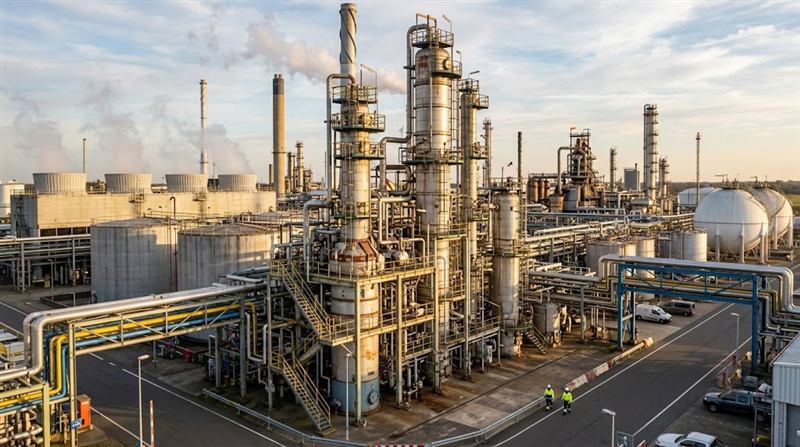
Chemical and Petrochemical Processing
- Cracked ammonia components
- Petrochemical furnace parts
- Petrochemical waste remediation units
- Heat exchangers
- Flares
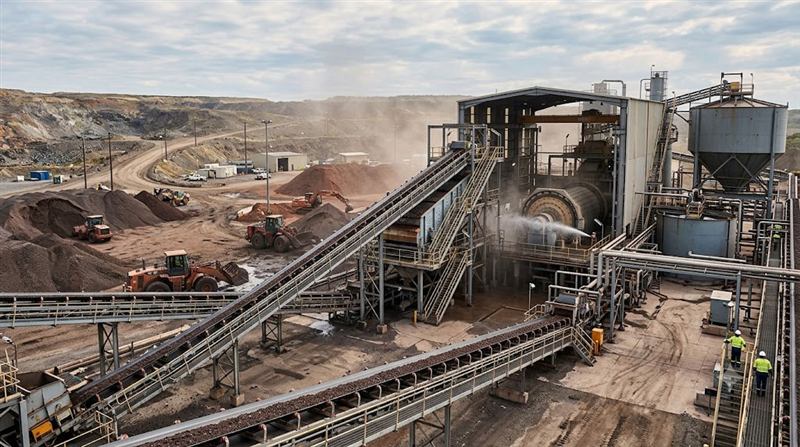
Ore Processing
- Perlite systems and equipment
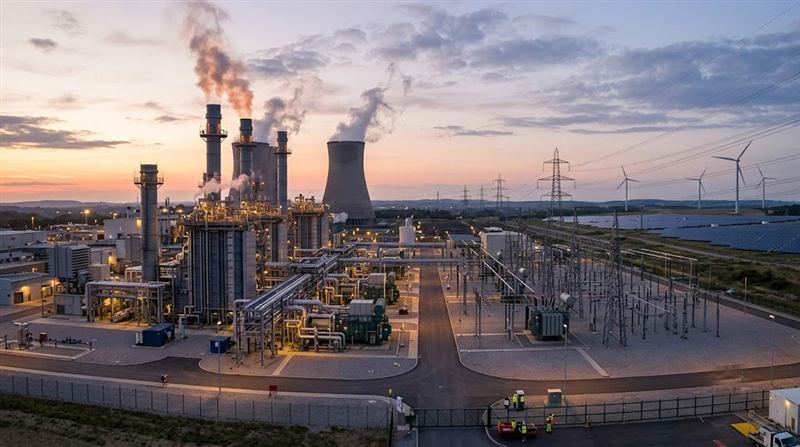
Power Generation
- Boiler fixtures
- Gas turbine components
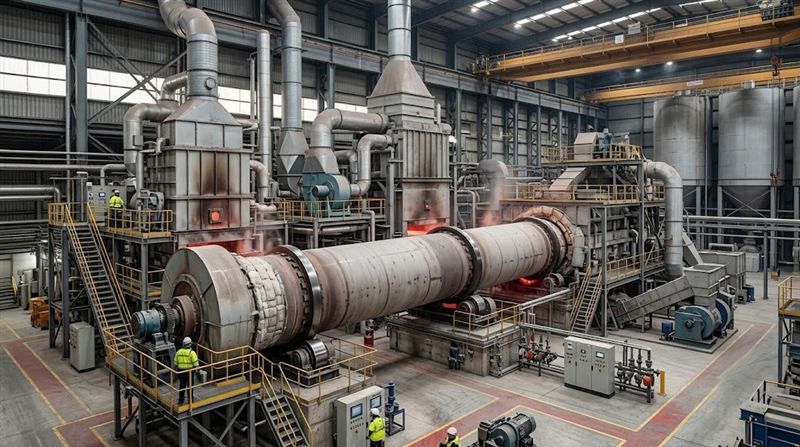
Thermal Processing
- Heat-treat furnace containers
- Heat-treat furnace components
- High temperature fans
- Salt pots
Specify the Conditions Behind the Application
The applications listed above are material-use examples. Match the plate to the equipment’s actual exposure and design requirements.
| Component or duty | Information for selection |
|---|---|
| Furnace containers and fixtures | Operating and peak temperatures, atmosphere, cycle frequency, dwell time and supported load. |
| Petrochemical furnace parts | Gas composition, carburizing exposure, contaminants and operating duration. |
| High-temperature fans | Temperature, rotational loading, vibration and fabrication details. |
| Heat exchangers and salt pots | Process media, concentration, pressure, temperature and joint design. |
Elevated-temperature design: For sustained loading at elevated temperature, use applicable creep and stress-rupture data during engineering assessment. Room-temperature tensile values and oxidation-resistance figures cannot establish these limits.
Specifications
Alloy 330 plate is ordered to ASTM B536 for UNS N08330. Name ASME SB536 or AMS 5592 as well when your code or purchase specification requires it.
-
ASTMB 536
Product specification
Plate, sheet and strip in UNS N08330 and N08332: chemistry, mechanical properties, condition and tolerances.
-
ASMESB 536
Pressure-equipment code
The ASME Boiler and Pressure Vessel Code version of B536, named where code construction requires it.
-
AMS5592
Aerospace specification
Named only where an aerospace or AMS-based purchase specification calls for it.
Material Standards and Order Requirements
- Identify UNS N08330 explicitly: ASTM B536 also covers N08332.
- State the required edition and any supplementary requirements.
- For ASME SB536 or AMS 5592, give the exact governing specification and revision.
- One reference does not establish compliance with every listed standard.
Example order line
Alloy 330 plate, UNS N08330, ASTM B536 (state edition), annealed, 12.7 × 1250 × 2500 mm, 4 plates, EN 10204 3.1 certificate
The sizes and quantity are an illustration of the format only. Replace them with your own requirement.
Chemical Analysis
Typical Values (Weight %)
| Nickel | 34.0 - 37.0 | Chromium | 17.0 - 20.0 |
| Iron | Balance* | Carbon | 0.08 max. |
| Silicon | 0.75 - 1.50 | Manganese | 2.0 max. |
| Phosphorus | 0.030 max. | Sulfur | 0.030 max. |
Reading the chemistry table: The caption says “Typical Values”, but the entries include composition ranges and maximum limits. They are reference information, not results for the supplied heat. Use the applicable specification and heat-specific certificate to assess compliance. “Balance*” identifies iron as the remaining principal constituent.
Thermal and Electrical Properties
| Temperature | Thermal Conductivity | Electrical Resistivity | |||
|---|---|---|---|---|---|
| °F | °C | Btu-in/ft2M/-h-°F | W/m-°C | ohm-circ mil/ft | mW-m |
| 75 | 24 | 86 | 12.4 | 612 | 1.017 |
| 400 | 204 | 108 | 15.6 | 649 | 1.079 |
| 800 | 227 | 134 | 19.3 | 688 | 1.144 |
| 1200 | 649 | 162 | 23.4 | 721 | 1.199 |
| 1600 | 871 | 198 | 28.6 | 744 | 1.237 |
| 1800 | 982 | 216 | 31.2 | 749 | 1.245 |
Temperature clarification: 800°F is approximately 427°C. The 227°C cell in the table above is a conversion error.
Unit clarification: The thermal-conductivity units are Btu·in/(ft²·h·°F) and W/(m·K). Electrical resistivity in the final column is µΩ·m, not the displayed “mW-m”. These property values describe reference material behaviour, not batch acceptance results.
Mechanical Properties
Typical Room Temperature Mechanical Properties, Mill Annealed
| Yield Strength 0.2% Offset |
Ultimate Tensile Strength |
Elongation in 2 inches (50mm) |
Hardness | ||
|---|---|---|---|---|---|
| ksi | (MPa) | ksi | (MPa) | % | Rockwell B |
| 30 - 43 | 207 - 296 | 80 - 85 | 552 - 586 | 40 - 45 | 70 – 85 |
Using the mechanical values: These are typical room-temperature values for mill-annealed material. They are not guaranteed results for every plate or allowable stresses for high-temperature design. Order acceptance is set by the minimum properties in the governing specification and the results on the heat certificate.
Cutting, Fabrication and Welding
Champak Industries describes full and part plate/profile supply and a plasma-cutting service. Send drawings, piece quantities, tolerances, edge finish and machining allowances for your Alloy 330 requirement.
Forming and machining
Alloy 330 work-hardens during forming and machining. Select tooling and forming practice for the plate condition and thickness. It is not hardened by heat treatment; annealing requirements should follow the material producer’s guidance and fabrication procedure.
Welding
Use a qualified procedure suited to the supplied material, joint and service. Control heat input, remove contamination and select compatible filler with producer guidance. Proprietary RA330® recommendations should not be transferred automatically to generic Alloy 330.
Testing, Certificates and Heat Traceability
Specify the inspection-document type and required heat identification when ordering. Request chemistry, mechanical results, dimensions and delivery condition appropriate to the governing specification. For cut pieces, state how identification must link each piece to the parent heat.
| Requirement | What to identify in the order |
|---|---|
| Inspection document | Certificate type (for example EN 10204 3.1 or 3.2), showing heat number, chemistry, mechanical results and delivery condition |
| Heat traceability | Heat marking on each plate and how it is transferred to cut pieces |
| Additional tests | PMI, ultrasonic or surface examination: method, extent and acceptance criteria |
| Inspection | Dimensional checks and any buyer or third-party witness requirements |
A management-system certificate is separate from a material inspection certificate or project approval. See the company’s Quality Policy for its published policy.
Source Alloy 330 Plates from Champak Industries
Champak Industries’ company profile records its establishment in Mumbai in 1978 and stockist, import and export activities. Its plate and profile supply provides a purchasing route for full-plate and drawing-based requirements, and Alloy 330 can be enquired for together with the other high nickel alloy plates. Submit the complete material and inspection specification with your enquiry.
What Determines the Alloy 330 Plate Quotation?
Thickness, dimensions, quantity, delivery condition, required source, cutting, testing and documentation affect the quotation. Include destination and packing requirements so freight and processing can be addressed. State whether pricing is required per kilogram, plate or finished piece.
Packing, Dispatch and Export Requirements
Provide the delivery address, required receipt date and unloading constraints. Specify protective packing, piece identification and handling requirements. For export orders, include the destination port, delivery terms and documentation list. State your required dispatch or delivery date in the enquiry.
Alloy 330 Plates: Frequently Asked Questions
01What is the UNS designation for Alloy 330?
UNS N08330 identifies the Alloy 330 grade discussed on this page. It is an austenitic nickel-iron-chromium alloy with 34–37% nickel and 17–20% chromium.
02Is Alloy 330 the same as RA330®?
Not automatically. RA330® is a proprietary Rolled Alloys product made to the same UNS N08330 grade with additional producer controls. Specify that brand explicitly when required.
03Which plate specification should I state?
ASTM B536 is the relevant product specification for N08330 plate. Include the grade, edition and project requirements, and name ASME SB536 or AMS 5592 only where your purchase specification requires them.
04Which thicknesses are listed?
The published range is 3/16" to 1" (4.8mm to 25.4mm): 3/16", 1/4", 3/8", 1/2", 5/8", 3/4" and 1". Send the width and length you need with the thickness.
05Is one maximum service temperature enough for selection?
No. Atmosphere, load, duration, cycling and design requirements also matter. Use creep and stress-rupture data for loaded parts at elevated temperature.
06What should I provide for cut pieces?
Provide dimensions or a drawing, quantity, tolerances, edge requirements and machining allowance, and state how heat identification must be carried onto each piece.
07Can Alloy 330 be welded?
Yes, with an appropriate qualified procedure and compatible filler for the material and service. Clean the joint area and control heat input.
08Are the displayed properties actual plate test results?
No. They are typical reference values. Request the heat-specific inspection document and required test results.
09How should I specify quantity?
State plate or piece count, dimensions and total weight where known.
10How do I obtain price and delivery details?
Send the specification, sizes, quantity, processing, inspection requirements, destination and required date through the enquiry form below, by WhatsApp or by phone.