
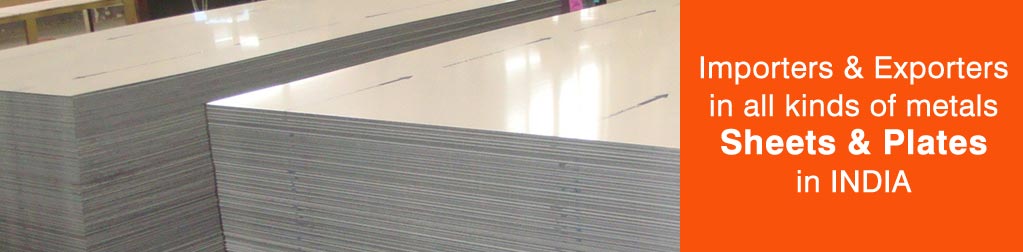
Alloy 625 plates or Inconel 625 is a nickel-base alloy used both for its high electricity and excellent aqueous corrosion resistance. The strength of alloy 625 is mostly a strong solution effect from molybdenum and columbium. Alloy 625 has great weldability and is frequently used to weld AL-6xn alloy. Matching filler metals also are used to enroll in distinctive metals.
In plain terms: Alloy 625 is used for its high strength (not “electricity”) and excellent aqueous corrosion resistance. Its strength comes mainly from solid-solution strengthening by molybdenum and columbium (niobium). Alloy 625 filler metal is often used to weld AL-6XN® and other super-austenitic stainless steels, and to join dissimilar metals. Inconel® is a Special Metals brand; generic Alloy 625 is not automatically Inconel® 625.
Alloy 625 Plates: Purchasing Specification
| Requirement | What to specify |
|---|---|
| Grade and form | Alloy 625 / UNS N06625 plate (W.Nr. 2.4856). |
| Product standard | ASTM B443 or ASME SB443, Grade 1 (annealed) or Grade 2 (solution annealed); state the required edition. |
| Dimensions | Thickness × width × length and number of plates. This page does not publish a size range, so send the sizes you need. |
| Service | Corrosion service, or high-temperature service where creep and rupture strength matter; this decides the grade. |
| Processing | Full plate, cut piece or profile; drawing, quantity, edge finish and machining allowance. |
| Documents and inspection | Inspection certificate type, heat traceability, PMI, sour-service compliance and third-party inspection where required. |
Dimensions, Condition and Tolerances
Specify thickness × width × length and the number of plates or pieces. For profiles or blanks, provide a dimensioned drawing with units, revision and finished-part tolerances, and say whether sizes are finished dimensions or include a machining allowance.
ASTM B443 covers hot-rolled and cold-rolled plate, sheet and strip and sets the permitted variations in thickness, width, length and flatness. Attach your own limits where they are tighter, and state the surface finish and edge condition you need.
Chemistry
| Cr | Ni | Mo | Co | Cb+Ta | Al | Ti | C | Fe | Mn | Si | P | S | |
|---|---|---|---|---|---|---|---|---|---|---|---|---|---|
| MIN | 20.0 | - | 8.0 | - | 3.15 | - | - | - | - | - | - | - | - |
| MAX | 23.0 | Balance | 10.0 | 1.0 | 4.15 | 0.4 | 0.4 | 0.1 | 5.0 | 0.5 | 0.5 | 0.015 | 0.015 |
Reading the chemistry table: Nickel is shown as “Balance”; ASTM B443 also requires at least 58.0% nickel. Cb (columbium) is niobium. The values are specification limits, not results for the supplied heat; check compliance on the heat certificate.
Specifications
- AMS 5666, AMS 5837
- ASME SB 443 Gr 1, ASME SB 446 Gr 1
- ASTM B 443 Gr 1, ASTM B 446 Gr 1
- EN 2.4856
- ISO 15156-3
- NACE MR0175-3
- UNS N06625
- Werkstoff 2.4856
Which Specification Applies to Plate?
The list above mixes plate and bar standards, aerospace specifications, sour-service standards and material identifiers. For Alloy 625 plate, name ASTM B443 or ASME SB443, the grade and UNS N06625 on the order.
| Reference | What it covers | Use for this plate order |
|---|---|---|
| ASTM B443 / ASME SB443 | N06625 plate, sheet and strip, Grade 1 and Grade 2 | The product specification to state |
| ASTM B446 / ASME SB446 | N06625 rod and bar | Not a plate specification |
| AMS 5666 / AMS 5837 | Aerospace bar and forgings / welding wire | Not plate specifications |
| ISO 15156-3 / NACE MR0175 | Material requirements for H₂S-containing (sour) oil and gas service | Add when the plate is for sour service |
| UNS N06625, W.Nr. 2.4856 | Material identifiers | Identify the grade; they do not set plate requirements |
Identifier notes: “EN 2.4856” and “Werkstoff 2.4856” are the same material number; it is not an EN standard. “NACE MR0175-3” refers to the joint standard NACE MR0175/ISO 15156-3. “Gr 1” is the annealed grade; Grade 2 (solution annealed) is also available under B443 for high-temperature service.
Inventory
625 Coil, 625 Plate, 625 Round Bar, 625 Sheet, 625 Weld Wire
This page covers Alloy 625 plate. Ask for coil, round bar, sheet or weld wire separately in your enquiry, with the form, size and specification for each item.
Common Trade Names
Inconel® 625, Alloy 625, Nickel 625
Features
- High creep-rupture strength
- Oxidation resistant to 1800°F
- Good fatigue resistance
- Excellent weldability
- Outstanding resistance to chloride pitting and crevice corrosion
- Immune to chloride ion stress corrosion cracking
- Resistant to seawater under both flowing and stagnant conditions and under fouling
Reading the features: 1800°F (about 982°C) is an oxidation-resistance figure, not a design temperature; loaded parts need creep and rupture data. “Immune” to chloride stress corrosion cracking is best read as very high resistance: Alloy 625 resists it in most service, but no alloy is immune under every condition.
Why Select Alloy 625 Plates?
Alloy 625 is chosen when equipment needs both corrosion resistance and strength: its high molybdenum content resists pitting and crevice corrosion in seawater and chloride media, and niobium adds strength without age hardening. The main buying decision is the ASTM B443 grade, which depends on the service temperature.
| ASTM B443 grade | Condition | Typical use |
|---|---|---|
| Grade 1 | Annealed | Corrosion service and moderate temperatures (B443 notes it for service up to about 1100°F / 593°C) |
| Grade 2 | Solution annealed | High-temperature service where creep and rupture strength matter (above about 1100°F / 593°C) |
For milder acid service at lower cost, compare Alloy 825 Plates. The grades are not interchangeable, so compare corrosion data for your process.
Applications
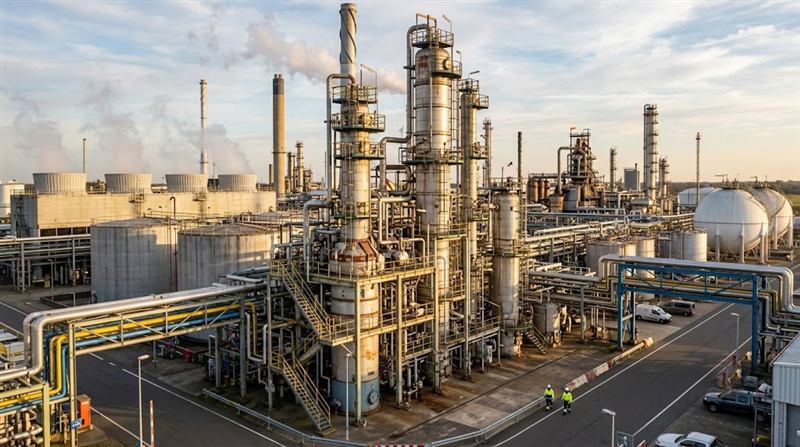
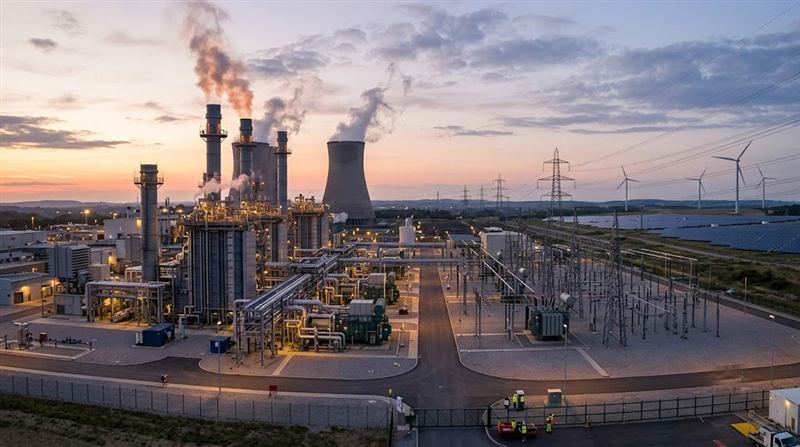
- Aircraft ducting systems
- Jet engine exhaust systems
- Engine thrust-reverser systems
- Bellows and expansion joints
- Turbine shroud rings
- Flare stacks
- Seawater components
- Chemical process equipment handling mixed acids both oxidizing and reducing.
Specify the Conditions Behind the Application
The applications above are common uses of the material. Aerospace parts are normally bought to aerospace (AMS) specifications and approvals, so state those requirements in full.
| Duty | Information for selection |
|---|---|
| Seawater and chloride service | Temperature, chloride level, crevices, flow and galvanic contact. |
| Mixed-acid process equipment | Acid types and concentrations, temperature and oxidizing or reducing conditions. |
| Flare stacks, ducting and bellows | Operating and peak temperatures, thermal cycling, fatigue loading and B443 grade. |
| Oil and gas sour service | H₂S partial pressure, chlorides, temperature and ISO 15156-3 / NACE MR0175 limits. |
Physical Properties
Density: 0.305 lb/in 3
Melting Point: 2350-2460°F
| Temperature, °F | 70 | 400 | 600 | 800 | 1000 | 1200 | 1400 | 1600 |
|---|---|---|---|---|---|---|---|---|
| Coefficient* of Thermal Expansion, in/in°F x 10 -6 | - | 7.3 | 7.4 | 7.6 | 7.8 | 8.2 | 8.5 | 8.8 |
| Thermal Conductivity Btu • ft/ft2 • hr • °F |
5.7 | 7.2 | 8.2 | 9.1 | 10.1 | 11.0 | 12.0 | 13.2 |
| Modulus of Elasticity, Dynamic psi x 10 6 | 30 | 28 | 28 | 27 | 26 | 24 | 23 | - |
* 70°F to indicated temperature.
Units and metric equivalents: “lb/in 3” is lb/in³; 0.305 lb/in³ is about 8.44 g/cm³. 2350–2460°F is about 1288–1349°C. “x 10 -6” and “x 10 6” mean ×10⁻⁶ and ×10⁶. Thermal conductivity in Btu·ft/(ft²·h·°F) multiplied by 1.731 gives W/(m·K), so 5.7 is about 9.9 W/(m·K); 30 ×10⁶ psi is about 207 GPa. These are reference values, not batch test results.
Mechanical Properties
Representative Tensile Properties, Bar
| Temperature,°F | 70 | 400 | 600 | 800 | 1000 | 1200 | 1400 | 1600 |
|---|---|---|---|---|---|---|---|---|
| Ultimate Tensile Strength, ksi | 144 | 134 | 132 | 132 | 130 | 119 | 78 | 40 |
| 0.2% Yield Strength, ksi | 84 | 66 | 63 | 61 | 61 | 60 | 59 | 39 |
| Elongation, % | 44 | 45 | 42.5 | 45 | 48 | 34 | 59 | 117 |
Bar, not plate: These are representative values for bar. Plate acceptance uses the minimums in ASTM B443 for the grade, form and thickness ordered, and the results on the heat certificate.
Typical Rupture Strength Bar, Stress to Rupture at Indicated Time
| Temperature, °F | 1200 | 1300 | 1400 |
|---|---|---|---|
| 100 Hours, ksi | 59 | 34 | 18 |
| 1,000 Hours, ksi | 43 | 23 | 12 |
INCONEL and INCOLOY are registered trademarks of Special Metals (PCC)
Using rupture data: 1200–1400°F is about 649–760°C. These typical bar values show how strength falls with time at temperature. Pressure-equipment design uses the allowable stresses in the applicable code, not typical rupture values.
Cutting, Fabrication and Welding
Champak Industries describes full and part plate/profile supply and a plasma-cutting service. Send drawings, piece quantities, tolerances, edge finish and machining allowances for your Alloy 625 requirement.
Forming and machining
Alloy 625 is strong and work-hardens quickly, so forming needs more force than stainless steel and machining needs rigid set-ups, sharp tools and low speeds. It is not age-hardened; strength comes from its chemistry and the grade’s heat treatment.
Welding
Weld with a qualified procedure and matching filler, commonly ERNiCrMo-3 wire or ENiCrMo-3 electrodes. Clean the joint thoroughly and control heat input and interpass temperature.
Testing, Certificates and Heat Traceability
Specify the inspection-document type, B443 grade and heat identification when ordering. Request chemistry, mechanical results, dimensions and condition to the governing specification. For cut pieces, state how identification must be carried from the parent plate to each piece.
| Requirement | What to identify in the order |
|---|---|
| Inspection document | Certificate type (for example EN 10204 3.1 or 3.2) showing heat number, grade, chemistry and mechanical results |
| Heat traceability | Heat marking on each plate and how it is transferred to cut pieces |
| Sour service and corrosion tests | ISO 15156-3 / NACE MR0175 compliance, hardness limits and any corrosion test with its method and acceptance criteria |
| PMI and inspection | Positive material identification, dimensional checks and any buyer or third-party witness |
A management-system certificate is separate from a material inspection certificate or project approval. See the company’s Quality Policy for its published policy.
Source Alloy 625 Plates from Champak Industries
Champak Industries’ company profile records its establishment in Mumbai in 1978 and its stockist, import and export activities. This page lists Alloy 625 in coil, plate, round bar, sheet and weld wire, so plate and matching weld wire can be requested in one enquiry, along with the other high nickel alloy plates. Submit the complete material and inspection specification with your enquiry.
What Determines the Alloy 625 Plate Quotation?
Nickel and molybdenum prices, B443 grade, thickness, plate size, quantity, required brand or source, cutting, testing and documentation all affect the quotation. Include the destination and packing requirements, and say whether pricing is needed per kilogram, per plate or per finished piece.
Packing, Dispatch and Export Requirements
Give the delivery address, required date and unloading constraints. Specify protective packing that keeps the plate away from carbon-steel contamination, piece identification and handling needs. For export orders, include the destination port, delivery terms and document list.
Alloy 625 Plates: Frequently Asked Questions
01What is the UNS number for Alloy 625?
Alloy 625 is UNS N06625, also identified as W.Nr. 2.4856. It is a nickel-chromium-molybdenum alloy strengthened by niobium.
02Is Alloy 625 the same as Inconel 625?
Inconel® 625 is Special Metals’ trade name for UNS N06625. Generic Alloy 625 plate meets the same UNS grade but is not automatically that brand, so name the brand if your project requires it.
03Which specification should I state for Alloy 625 plate?
State ASTM B443 or ASME SB443 with UNS N06625, the grade and the required edition. B446 is for rod and bar.
04Should I order Grade 1 or Grade 2?
Grade 1 (annealed) is normally ordered for corrosion service. Grade 2 (solution annealed) is ordered for high-temperature service where creep and rupture strength matter.
05Is Alloy 625 suitable for seawater?
Yes. Its high molybdenum content gives strong resistance to pitting and crevice corrosion in flowing and stagnant seawater. Give the temperature and crevice conditions for critical parts.
06Which plate sizes can I order?
This page does not publish a size range. Send the thickness, width, length and quantity, or a drawing for cut pieces, for availability and a quotation.
07Which filler metal is used to weld Alloy 625?
Matching filler such as ERNiCrMo-3 wire or ENiCrMo-3 electrodes is commonly used, with a qualified welding procedure.
08Are the properties on this page plate test results?
No. The tensile and rupture tables are representative values for bar. Request the heat-specific inspection certificate for the plate supplied.
09Can Alloy 625 plate be supplied for sour service?
State ISO 15156-3 / NACE MR0175 in the enquiry, with the service conditions and hardness limits, so the certificate can show compliance.
10How do I get a price and delivery date?
Send the grade, specification, sizes, quantity, cutting, inspection requirements, destination and required date through the enquiry form below, by WhatsApp or by phone.