
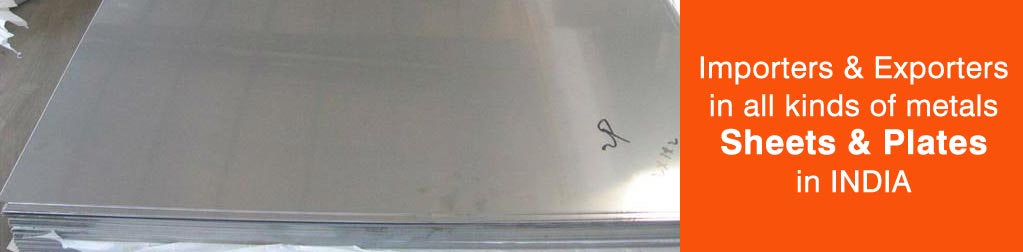
A weldable carbon steel plates for pressure vessels and boilers used in elevated temperatures. The material benefits from added chromium and molybdenum which gives the steel greater corrosion resistance and resistance to heat. ASTM A387 GRADE 9 is used by fabricators who serve the oil, gas and petrochemical industry.
ASTM A387 Grade 9 is available ex stock form our UK warehouse and we can dispatch to clients on a global basis. As with all our carbon steel plates, the material comes with mill certification and stampings.
Steel type: A387 Grade 9 is a chromium-molybdenum alloy steel (nominally 9% Cr – 1% Mo), not a carbon steel. A387 covers alloy-steel plate for welded boilers and pressure vessels in elevated-temperature service.
Stock location: Champak Industries is based in Mumbai, India. The reference to a UK warehouse is in the original text; confirm stock, location and delivery time with us when you enquire.
Corrosion resistance: Chromium improves resistance to oxidation and high-temperature sulfidation; chrome moly plate is not a stainless steel, so corrosion allowance still applies.
ASTM A387 GRADE 9 Class 2: Purchasing Specification
| Requirement | What to specify |
|---|---|
| Grade and specification | ASTM A387 Grade 9 Class 2 ; state the edition, and dual certification to ASME SA-387 if the plate is for ASME code construction. |
| Heat treatment | Annealed, or normalized and tempered, as A387 allows; Class 2 may also be accelerated-cooled or quenched and tempered where the standard permits. State any simulated PWHT of test coupons. |
| Dimensions | Thickness × width × length in mm or inches, and the number of plates or cut pieces. Sizes are confirmed at quotation. |
| Tolerances | A20 thickness and flatness tolerances, or tighter project limits. |
| Supplementary tests | A20 supplementary requirements as needed: simulated PWHT of test coupons, Charpy impact tests, ultrasonic testing. |
| Documents | Mill test certificate (EN 10204 3.1 or 3.2), marking and any third-party inspection. |
Dimensions, Cutting and Tolerances
Specify thickness × width × length and the number of plates, or send a dimensioned drawing for cut pieces and profiles with the revision, finished-part tolerances and machining allowance. Plates for shells and heads may also need edge preparation for welding.
Equivalents for ASTM A387 Grade 9 Alloy Steel Plates
| BS | EN | ASME | DIN |
|---|---|---|---|
| ... | ... | A387-9-2 | ... |
Comparable, not equal: The original table gives no BS, EN or DIN grade for Grade 9, and we do not list an EN plate equivalent for it. Grades in other standards have different chemistry, strength and test requirements, so substitution needs the purchaser’s approval.
Specifications for ASTM A387 Grade 9 Alloy Steel Plates
Chromium & Molybdenum content (according to the ASME specification)
| Designation | Nominal Chromium Content (%) |
Nominal Molybdenum Content (%) |
|---|---|---|
| A387 Grade 9 | 9.00% | 1.00% |
ASME or ASTM: The original line refers to the ASME specification. ASTM A387 and ASME SA-387 give the same chromium and molybdenum ranges for the edition ASME adopts.
Tensile Requirements for ASTM A387 Grade 9 Alloy Steel Plates Class 2 Plates
| Designation: | Requirement: | Grade 9 |
|---|---|---|
| A387 Grade 9 | Tensile strength, ksi [MPA] | 75 to 100 [515 to 690] |
| Yield strength, min, ksi [MPa]/(0.2% offset) | 45 [310] | |
| Elongation in 8 in. [200mm], min % | ... | |
| Elongation in 2 in. [50mm], min, % | 18 | |
| Reduction of area, min % | 45 (measured on round test specimens) 40 (measured on flat test specimen) |
Reading the table: “...” means the standard sets no requirement for that item. Elongation and reduction-of-area requirements depend on specimen type and plate thickness; check them against the edition you order.
Chemical Requirements for ASTM A387 Grade 9 Alloy Steel Plates
| Element | Chemical Composition (%) | |
|---|---|---|
| A387 Grade 9 | ||
| Carbon: | Heat Analysis: | 0.15 max |
| Product Analysis: | 0.15 max | |
| Manganese: | Heat Analysis: | 0.30 - 0.60 |
| Product Analysis: | 0.25 - 0.66 | |
| Phosphorus: | Heat Analysis: | 0.030 |
| Product Analysis: | 0.030 | |
| Sulphur (max): | Heat Analysis: | 0.030 |
| Product Analysis: | 0.030 | |
| Silicon: | Heat Analysis: | 1.00 max |
| Product Analysis: | 1.05 max | |
| Chromium: | Heat Analysis: | 8.00 - 10.00 |
| Product Analysis: | 7.90 - 10.10 | |
| Molybdenum: | Heat Analysis: | 0.90 - 1.10 |
| Product Analysis: | 0.85 - 1.15 | |
| Vanadium: | Heat Analysis: | 0.04 max |
| Product Analysis: | 0.05 max |
Reading the chemistry: Single values for phosphorus and sulfur are maximums. “Heat analysis” is the ladle analysis; “product analysis” is a check analysis on the finished plate. Later editions of A387 have lowered some phosphorus and sulfur limits, so the certificate must meet the edition stated on the order.
Class 1 or Class 2: Choosing A387 Grade 9
A387 sets two strength levels for each of Grades 5, 9, 11, 12 and 22. Class 1 has the lower tensile and yield requirements; Class 2 has the higher. The class sets the allowable stresses used in the design (ASME Section II Part D), so order the class your design calculations use. Class 2 can allow a thinner section for the same design stress.
| Class | Tensile strength | Yield strength, min | Product page |
|---|---|---|---|
| Class 1 | 60–85 ksi [415–585 MPa] | 30 ksi [205 MPa] | ASTM A387 GRADE 9 Class 1 |
| Class 2 | 75–100 ksi [515–690 MPa] | 45 ksi [310 MPa] | This page |
Comparing A387 Grades
| Grade | Nominal alloying | Typical reason to choose |
|---|---|---|
| Grade 5 | 5% Cr – 0.5% Mo | More chromium than Grades 11, 12 and 22, for hot, sulfur-bearing refinery service |
| Grade 9 (this page) | 9% Cr – 1% Mo | Higher chromium for oxidation and sulfidation resistance at higher temperatures |
| Grade 11 | 1.25% Cr – 0.5% Mo | A widely used 1¼Cr–½Mo grade for refinery and power-plant vessels |
| Grade 12 | 1% Cr – 0.5% Mo | The lowest-alloy chrome moly grade in the range, for moderately elevated temperature |
| Grade 22 | 2.25% Cr – 1% Mo | Higher temperature capability than Grades 11 and 12, and common for hydrogen service |
| Grade 91 | 9% Cr – 1% Mo – V – Nb | Vanadium and niobium additions give much higher creep strength than plain 9Cr–1Mo |
These grades are not interchangeable; use the grade and class approved in your design.
Applications for A387 Grade 9 Plate
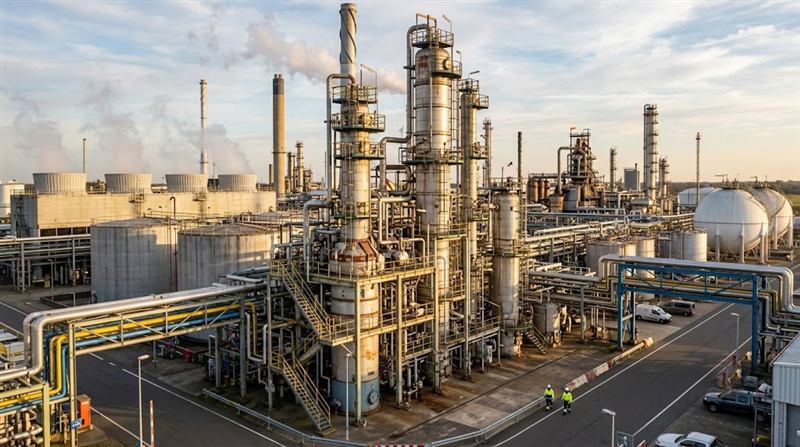
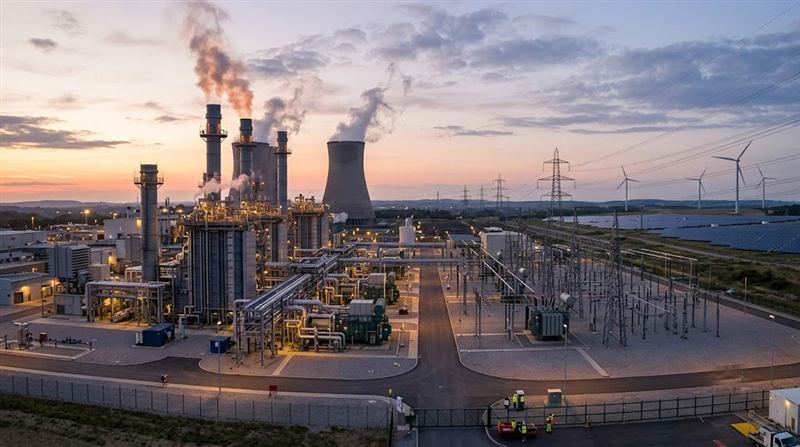
Higher-temperature refinery and petrochemical equipment that needs more oxidation and sulfidation resistance than the lower-chromium grades. Selection depends on design temperature, pressure, process media, hydrogen partial pressure and design life, so give these with your enquiry.
| Component or duty | Information for selection |
|---|---|
| Pressure-vessel shells and heads | Design code and edition, design temperature and pressure, thickness and PWHT. |
| Reactors and hydrogen service | Hydrogen partial pressure, temperature, toughness and step-cooling requirements. |
| Boiler and heat-exchanger parts | Steam or process temperature, media and corrosion allowance. |
Cutting, Fabrication and Welding
Champak Industries describes full and part plate/profile supply and a plasma-cutting service. Send drawings, piece quantities, tolerances, edge preparation and machining allowances for your Grade 9 requirement.
Welding
Use matching chromium-molybdenum consumables, for example AWS A5.5 E8018-B8 / E8015-B8 (9Cr–1Mo) type, with a procedure qualified to ASME Section IX. 9Cr–1Mo is air-hardening: preheat, interpass control and PWHT are needed, following the qualified WPS and construction code.
Forming and PWHT
Hot forming, and long or repeated PWHT, can lower the delivered strength. Give the PWHT cycle with your order so test coupons can be given simulated PWHT if your design requires it.
Testing, Inspection Documents and Traceability
Specify the inspection document, heat treatment and supplementary tests when ordering. A management-system certificate is separate from a material inspection document or project approval.
| Requirement | What to identify in the order |
|---|---|
| Mill test certificate | EN 10204 3.1 or 3.2 showing heat and product analysis, heat treatment and tensile results |
| Simulated PWHT | Temperature, holding time and cycles to apply to the test coupons |
| Impact testing | Test temperature and minimum absorbed energy, if required |
| UT and traceability | Ultrasonic testing (for example A435 or A578); heat and plate number transferred to cut pieces |
See the company’s Quality Policy for its published policy.
Source ASTM A387 GRADE 9 Class 2 from Champak Industries
Champak Industries’ company profile records its establishment in Mumbai in 1978 and its stockist, import and export activities. ASTM A387 GRADE 9 Class 2 plate can be requested together with the other ASTM A387 grades or the matching ASME SA 387 GRADE 9 Class 2 page for ASME code orders.
What Determines the Grade 9 Plate Quotation?
Thickness, plate size, quantity, heat treatment, supplementary tests, cutting, inspection and packing all affect the quotation. Include the destination, and say whether pricing is needed per kilogram, per plate or per finished piece.
Packing, Dispatch and Export Requirements
Give the delivery address, required date and unloading constraints; heavy plate may need special handling. For export orders, include the destination port, delivery terms and document list.
ASTM A387 GRADE 9 Class 2: Frequently Asked Questions
01What is ASTM A387 GRADE 9 Class 2?
It is 9% Cr – 1% Mo chromium-molybdenum alloy-steel plate to ASTM A387 Grade 9 at the Class 2 strength level, used for welded boilers and pressure vessels in elevated-temperature service.
02What is the difference between Grade 9 Class 1 and Class 2?
They share the same chemistry. Class 1 requires 60–85 ksi [415–585 MPa] tensile and 30 ksi [205 MPa] minimum yield; Class 2 requires 75–100 ksi [515–690 MPa] and 45 ksi [310 MPa].
03What is the chromium and molybdenum content of A387 Grade 9?
Nominally 9% Cr – 1% Mo. The heat analysis ranges are 8.00–10.00% chromium and 0.90–1.10% molybdenum.
04What tensile and yield strength does ASTM A387 GRADE 9 Class 2 require?
Class 2 requires a tensile strength of 75–100 ksi [515–690 MPa] and a minimum yield strength of 45 ksi [310 MPa].
05Is ASTM A387 the same as ASTM A387?
ASME SA-387 is the ASME Code adoption of ASTM A387, with the same requirements for the edition adopted. Vessels built to the ASME Code need plate certified to ASME SA-387, so specify dual certification if you need it.
06What is the EN equivalent of A387 Grade 9?
We do not list an EN plate equivalent for Grade 9. Use the A387 grade your design specifies.
07What heat-treatment condition is supplied?
Annealed, or normalized and tempered, as A387 allows; Class 2 may also be accelerated-cooled or quenched and tempered where the standard permits. State any simulated PWHT of test coupons.
08Can A387 Grade 9 plate be welded?
Yes, with matching chromium-molybdenum consumables (for example AWS A5.5 E8018-B8 / E8015-B8 (9Cr–1Mo) type) and a qualified procedure. 9Cr–1Mo is air-hardening: preheat, interpass control and PWHT are needed, following the qualified WPS and construction code.
09Which tests and documents should I request?
A mill test certificate to EN 10204 3.1 (or 3.2 with third-party inspection) showing heat and product analysis and tensile results, plus any A20 supplementary requirements such as simulated PWHT, impact testing or ultrasonic testing.
10How do I get a price and delivery date?
Send the grade and class, thickness, plate size, quantity, cutting, tests, destination and required date through the enquiry form below, by WhatsApp or by phone.